ad feature
Chances are you’ve never even heard of moissanite, right?
But perhaps you should get yourself better acquainted, because this gem is proving to be quite the rival to its better-known big sister, the diamond.
Diamonds are undoubtably beautiful, but they’re also shrouded in controversy. Mining for the gem is incredibly destructive on the environment, and great swathes of the African landscape and its delicate ecology have been destroyed in the process. Conflict diamonds, mined in war zones under brutal conditions, are collected and sold by rebel forces to buy weapons and fund their fighting.
Moissanites, by comparison, are both ethical and conflict free.
When it comes to minerals, diamonds and moissanites are remarkably similar – diamonds are a tiny bit harder (10 on the hardness scale, moissanites are 9.5), but moissanites are sparklier, refracting 2.4 times the amount of light rays of diamonds.
Diamonds are formed when carbon is subjected to intense heat and pressure over billions of years, while moissanites are formed when silicon carbine endures the same process. The latter, however, is much rarer than diamonds; first discovered by Henri Moissan in the late 1800s, it has only ever been discovered at a few locations, most often inside meterorites that have fallen to earth.
Because it was only ever found in tiny amounts, natural moissanite was never used to make jewellery. It was, however, recognised for its extreme strength. Scientists worked out a way to synthesise it in a more crude form, essentially creating lab-grown diamonds, and put them to use for industrial purposes.
It wasn’t until the mid-eighties that a US company, Charles and Colvard, used silicon carbide to create a gem-quality version of the mineral, one that could be cut, shaped and polished into a man-made diamond alternative so close in quality and appearance to a real diamond, even experienced jewellers struggled to tell them apart without specialist equipment.
Obviously, you’d expect to pay more for natural gems as opposed to lab-grown diamonds, but it might surprise you to know that moissanites are one-tenth the cost of diamonds; you get the same sparkly gorgeousness, for literally a fraction of the price.
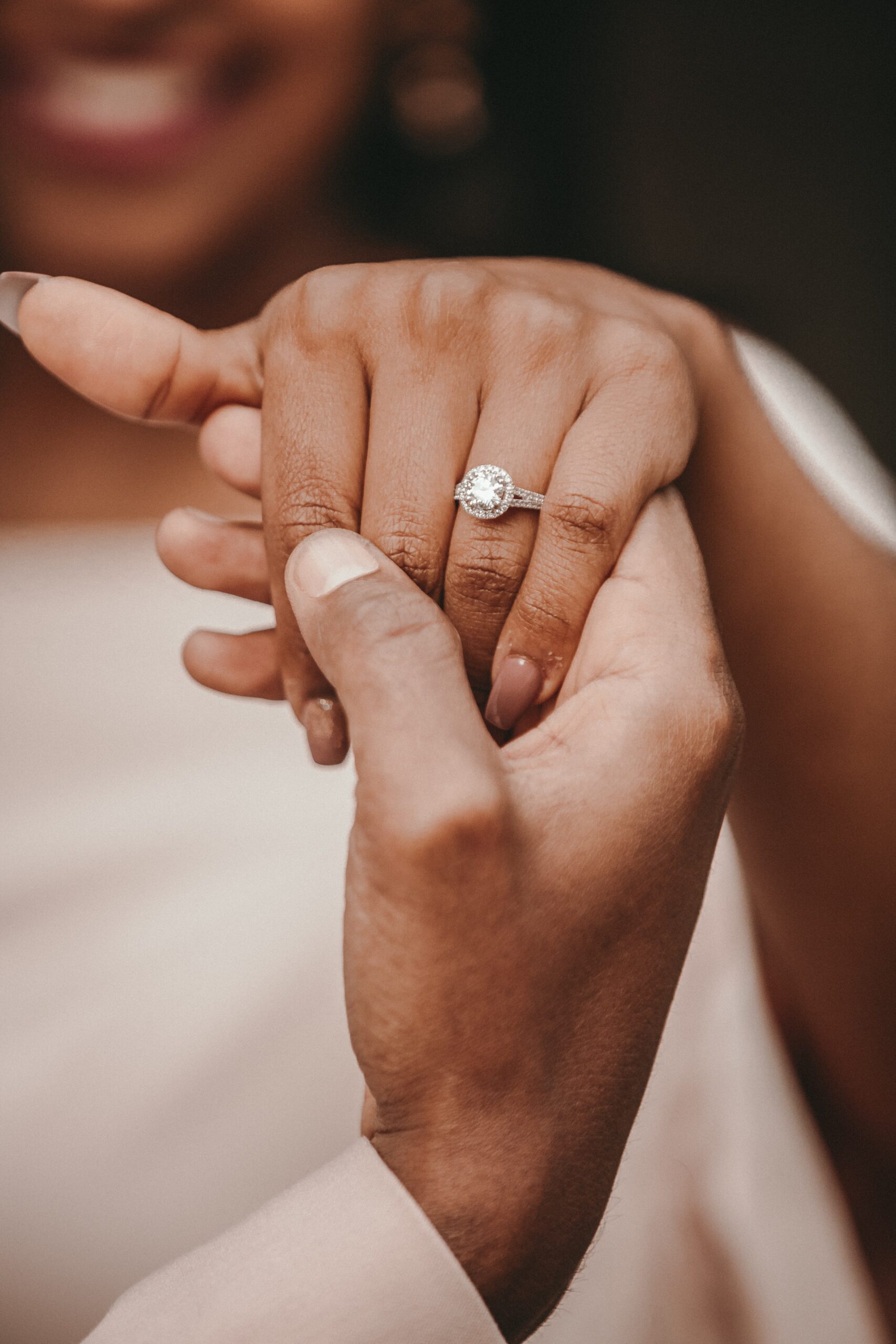
To put it another way – you can purchase a quality moissanite ring for £400 that’s almost indistinguishable from the real thing (in fact, even sparklier than the real thing!), while a would set you back £4000.
Just imagine how much bigger a stone you could afford, and you can relax knowing it’s a completely ethical, sustainable and eco-responsible option for your wedding day.
If you’re looking stunning, quality jewellery to celebrate an engagement, pregnancy, birthday or anniversary, remember that sometimes bigger definitely IS better…
READ: Time Goes By – Stunning Watches by Nordgreen
Image courtesy of Alekon pictures on Unsplash