
I always knew what I wanted to be when I grew up. While most five year olds dreamed of being astronauts and running hotels for kittens, I’d confidently announce: ‘I’m going to be a reporter!’
After finishing school I became one of the youngest students to be accepted on New Zealand’s most esteemed journalism training course. I cut my teeth on community papers before moving over to my greatest love – magazine features.
Over the next 20 years I was lucky enough to work on some incredible features desks and have my stories published in some of the world’s most famous glossies, including Cosmopolitan, Marie Claire, Look, Red, Psychologies and the Weekend magazine of The Guardian.
Then, 12 years ago, I moved over to this strange new thing called ‘blogging’, which eventually became my full-time job.
The amazing thing about blogging is that anyone can do it – if you have a passion for writing and a story to tell, you have an outlet sitting right there, ready and waiting for you. What this also means is that there are writers out there with an audience of thousands, even millions, who don’t have the formal training of those who traditionally had that same literary clout.
Now, let me be clear – I do NOT think you need to have a professional journalism qualification to be an amazing writer; in fact, some of the most moving pieces I’ve ever read have come via ‘amateurs’ who have a natural-born talent for putting words together and are literally writing straight from their souls.
In saying that, however, there are certain ‘do’s and don’ts’ you learn about writing when you study it at a higher level that you might not pick up organically. Avoiding these pitfalls will add polish to your words and help you write more professionally.
FIVE COMMON WRITING MISTAKES:
MAKING A POINT
You’ll rarely see a journalist using an exclamation point – they’re actively discouraged, unless undeniably required to express extreme surprise, or an overly exaggerated reaction. And, even then, they’re like white tigers – rarely seen and always on their own.
To see an exclamation point in every other sentence is a dead giveaway someone isn’t a trained writer, as they disrupt the flow of a sentence and are seen as a lazy way to insert drama or intensity when you should be using carefully chosen words instead.
So! Don’t! Use! Them! Unless! They’re! GENUINELY! Required!
DOUBLING UP
This one often clashes with the repetitive nature of search-engine-optimised posts, but one of the most common writing mistakes is to use the same words over and over. Instead, professional writers will find a synonym or a way to reword the paragraph to keep the copy tight and flowing smoothly.
For example, He walked through the door and heard the door shut behind him, would be tweaked to: He walked through the door and heard it shut behind him.
My advice would be to write as it comes out, then carefully read it back to swap out or remove any double ups. The same goes for descriptive words that say the same thing. For example, he shouted loudly; we already know that shouting is loud, therefore, the adverb ‘loudly’ isn’t necessary.
THIS & THAT
It may surprise you to find out the word ‘that’ is a professional no-no in the world of writing. Why? Because in most circumstances it’s completely superfluous. In an industry where not a single word could be wasted (because physical newspapers and magazines had a limited number of column inches) unnecessary words were always, well, unnecessary.
Read your sentences back with and without the word ‘that’; you’ll find it’s often not required, for example: ‘She thought that she’d locked the door, but it was wide open.’ ‘She thought she’d locked the door, but it was wide open.’
If you don’t need to use it, lose it.
UNDEREXPLAINING
As a reader, one thing I find really frustrating is when the full story isn’t properly revealed. I want to know those tasty little details that bring a story to life: I don’t want to hear that you were excited, I want to hear that you were so excited it felt like a bubble was expanding in your chest and was ready to explode. Because then I can put myself in your place and ‘feel’ the story alongside you.
As one old editor used to tell me: ‘Paint the scene’. What were you wearing? Was it hot or cold outside? What could you see around you? Don’t just tell the reader how you felt – happy, sad, apprehensive – explain the sensations so succinctly they actually experience the same emotion themselves.
OVEREXPLAINING
Now here’s where it might seem like I’m contradicting myself, but don’t go overboard. Too little can leave your story dry and drab, but too much makes it feel self indulgent and overdone – you want to hit that sweet spot in between. Your job as a writer is to lead the reader to water, but not to drink it for them. If you eloquently paint the scene (as mentioned in the previous paragraph) you don’t have to tell the reader how to react, as they’ll feel it naturally.
One of the hardest things I had to learn as a features journalist was what to leave in and what to cut out. With experience (and the guidance of some ruthless, but incredibly talented editors) I realised there was more power in 10 perfectly chosen words than 100 ‘there-for-the-sake-of-it’ ones.
Figure out the main vein of your story and cut out all the details that detract, confuse or take focus away. Otherwise it’s like those wine-fuelled catchups you have with your girlfriends, where you start a dozen conversations and never finish any of them – fun, but not entirely satisfying.
So there you have my top five common writing mistakes, and insider tips on how to write more professionally; I hope you’ve found them useful.
READ: 8 Ways to Inspire Creativity
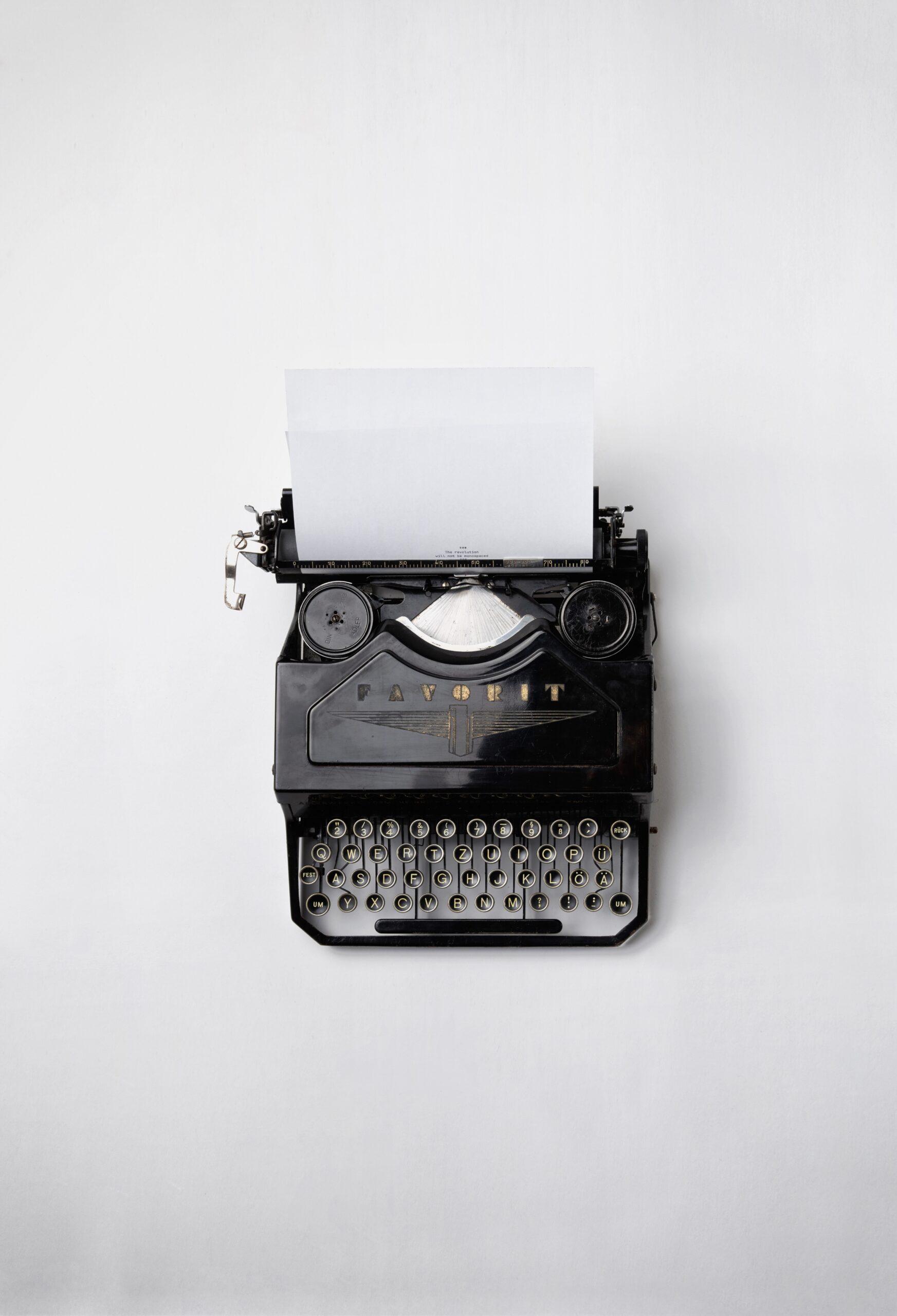
• image courtesy of Florian Klauer, Unsplash


